
Tag: satellite internet
-
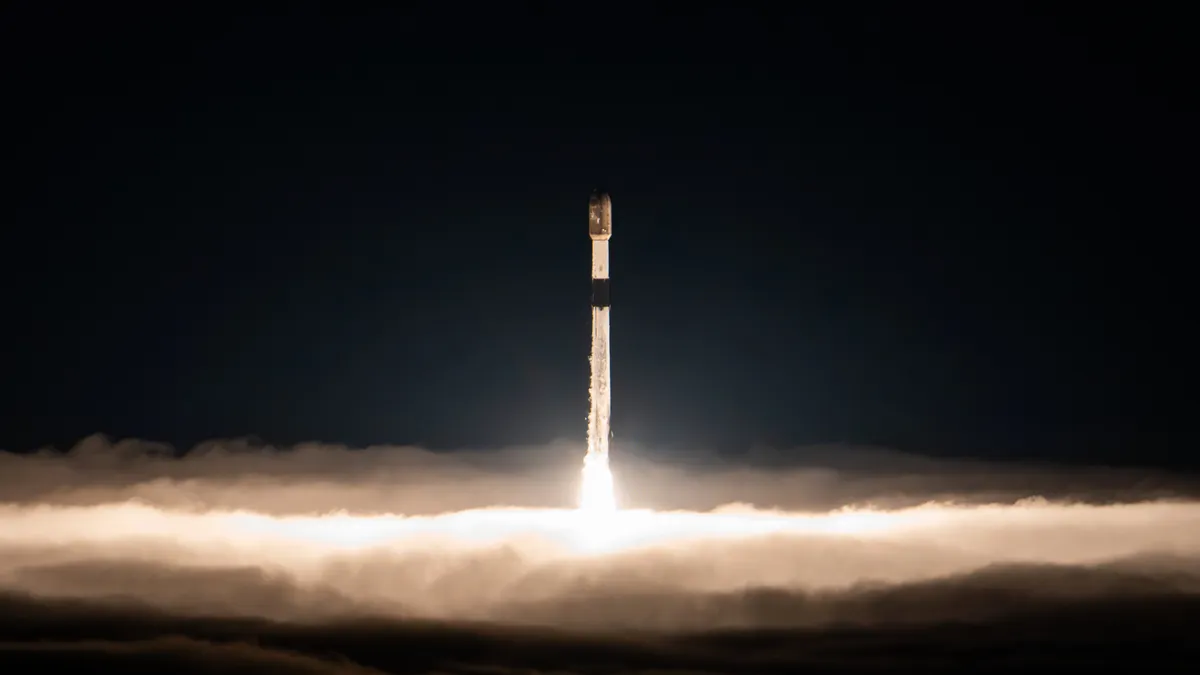
SpaceX Marks 100th Falcon Launch of 2026 with Starlink Group 15-20 Mission
SpaceX continued its record-setting launch pace on Aug. 22, successfully deploying 27 Starlink internet satellites into low Earth orbit aboard a Falcon 9 rocket from Vandenberg Space Force Base in California. The mission, designated Starlink Group 15-20, represented the company’s 100th Falcon-family launch of 2026 and further expanded the world’s largest satellite constellation. The Falcon…
-

Starlink Reapplies for India Approval of Nearly 30,000 Gen 2 Satellites With Direct-to-Device Capability
Starlink has renewed its push to expand in India, submitting a fresh application to the Indian National Space Promotion and Authorisation Centre (IN-SPACe) for authorization of nearly 30,000 second-generation satellites in low Earth orbit. The proposed Gen 2 network would add newer capabilities, including direct-to-device (D2D) connectivity, potentially allowing compatible mobile phones and other devices…
-

Commercial Space 2.0: Where Are the Opportunities for China’s Second-Generation Rocket Companies?
China’s commercial rocket industry officially began to take shape in 2015, when three government ministries jointly issued guidelines encouraging its development. Looking back from where the industry stands today, it took a decade for China to largely complete its policy framework and develop a basic supply chain. That period also saw the arrival of market…
-

China’s New Space Contest Will Be Fought With Commercial Satellites
Over the past decade, the commercial space industry has transformed satellites from assets reserved for national-level missions into industrial products that can be mass-produced and deployed on demand. As thousands of low-Earth-orbit broadband, remote-sensing and navigation satellites form constellations, space is taking on the characteristics of infrastructure for the first time—continuously providing connectivity, observation and…
-

Why Inter-Satellite Laser Communications Have Become a Strategic Battleground for Satellite Internet
In the traditional satellite-to-Earth transmission model, satellites serve only as relay nodes: they forward information but do not process it directly, while ground gateways and terrestrial networks perform the core functions. With inter-satellite links, by contrast, satellites can transmit and exchange information directly without routing every connection through a ground station. Each spacecraft acts as…
-

Russia Accelerates Rassvet Satellite-Internet Deployment
MOSCOW/KYIV, Aug. 13, 2026 — Russia is accelerating the deployment of Rassvet, a domestically developed low-Earth-orbit broadband constellation intended to reduce the country’s dependence on foreign satellite communications. Recent launches and orbital observations suggest that the project has moved beyond experimental testing, although its present capabilities remain far short of SpaceX’s Starlink network. The system…
-
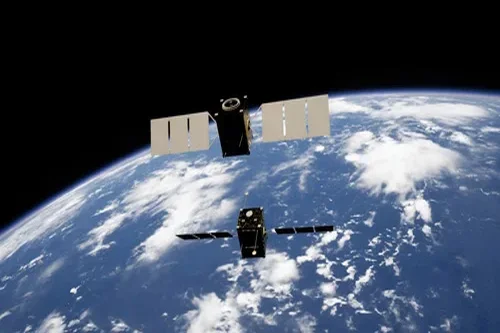
The Key Forces Shaping the Space Economy: Who Is Really Growing—and Who Is Just Telling a Story?
If launch costs have fallen to a fraction of their level 20 years ago, why has the global space economy not grown at the same pace? Over the past decade, reusable rockets have reduced the cost of reaching orbit by an order of magnitude, while the number of satellites launched has increased severalfold. Yet the…
-
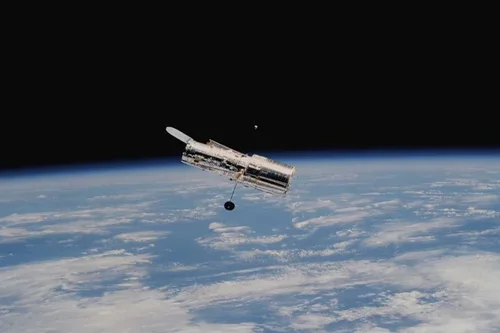
The New Space Race Will Be Won by Commercial Satellites
Over the past decade, commercial space has transformed satellites from “national-level missions” into industrial products that can be mass-produced and deployed on demand. As thousands of low-Earth orbit broadband, remote-sensing and navigation satellites form interconnected constellations, space has acquired the characteristics of infrastructure for the first time. It can continuously provide connectivity, observation and positioning…
-

Amazon Leo Expands Into Construction Sector Through Hitachi Machinery Connectivity Deal
Amazon Leo has entered the construction sector through a new agreement with Hitachi Construction Machinery, as Amazon prepares for the initial rollout of its low Earth orbit satellite internet service later this year. The companies announced on Wednesday that Hitachi Construction Machinery will begin deploying portable Amazon Leo satellite terminals at construction sites in the…
-

Northwood Space Unveils Prism Antenna to Support High-Throughput Satellite Communications
Northwood Space has introduced Prism, a new parabolic antenna system designed to support high-volume satellite communications and growing demand for data-intensive space applications. The company said the 2.4-meter antenna is engineered to deliver high-throughput, bidirectional connectivity across multiple orbital regimes and is intended for use cases including enterprise backhaul, direct-to-cellular services, and space-based computing networks.…