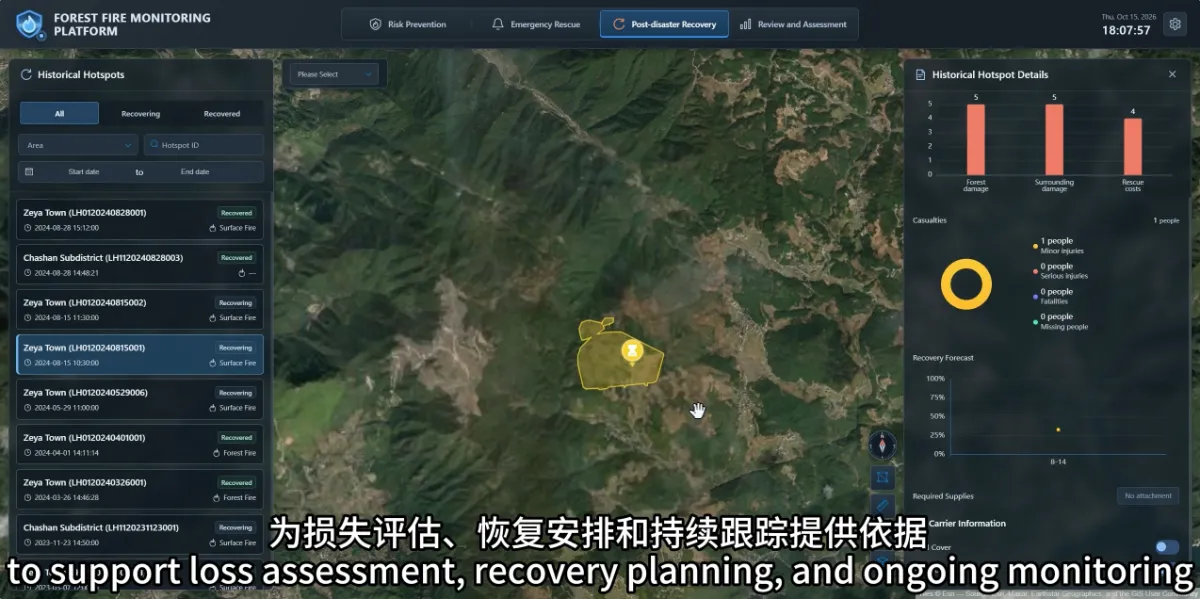
After a fire is extinguished, the platform can still support damage information management, recovery tracking and incident review. Linking these activities to the original incident helps managers follow subsequent work and learn from the response.
For forestry organisations, extinguishing the fire changes the focus of the work: from active response to damage verification, recovery planning and improvements to future preparedness.
How can teams track post-fire conditions?
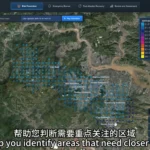
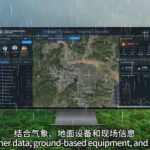
The post-disaster recovery module in the STARPATH GLOBAL wildfire monitoring platform organises burned area, damage-related information, recovery status and associated records by incident.
Staff can filter historical hotspots and review follow-up information to support recovery planning and ongoing monitoring. Records need to be updated as verification and recovery work progresses.
The information held in the platform can support assessment activities. Formal damage assessments and recovery decisions should also draw on field investigations and applicable operational requirements.
How can teams review the response?
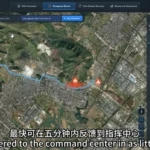
The platform uses an event timeline, map animation and personnel and vehicle tracks to present key stages from detection through response.
Managers can review when an alert entered the workflow, how teams moved, how additional support was coordinated and whether resource allocation met operational needs.
A useful review considers both timing and context, including what information was available, the conditions at the scene and the tasks assigned at the time.
How can the findings improve future fire management?
If contact with an area was difficult, managers can check whether responsibility and contact information was accurate. If resource mobilisation took longer than expected, they can review supply locations and coordination procedures. Access difficulties can inform revisions to plans and exercises.
Maintaining incident records, recovery information and review findings helps turn experience into practical improvements. The platform connects preparedness before a fire, coordination during the response and follow-up after the incident.