Rocket Lab is preparing to launch another synthetic aperture radar satellite for Japanese Earth observation company Synspective, extending one of the small-launch sector’s largest dedicated constellation deployment campaigns.
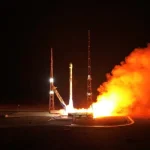
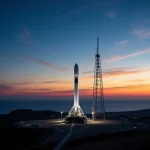
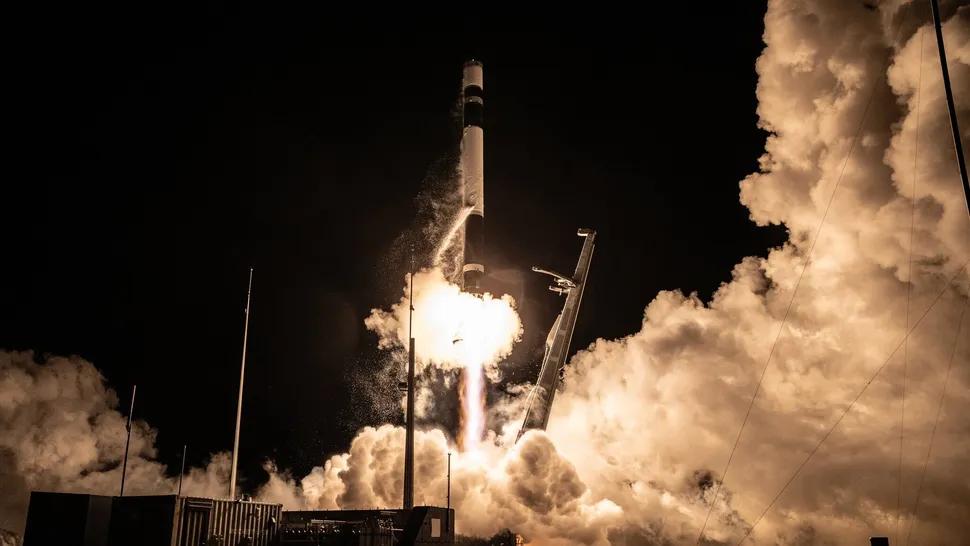
The Electron rocket is scheduled to lift off from Rocket Lab Launch Complex 1 on New Zealand’s Mahia Peninsula during a window opening at 11:00 UTC on September 2, or 11:00 p.m. local time. The mission, named “Owl Around the World,” was previously targeted for August 31 and then September 1 before being rescheduled to September 2.
Electron will carry a single StriX satellite into low Earth orbit. If the flight proceeds as planned, Rocket Lab’s Curie-powered kick stage will deploy the spacecraft about 56 minutes after liftoff at an altitude of approximately 575 kilometers.
The launch will be Rocket Lab’s 12th Electron mission of 2026 and the rocket’s 85th flight overall.
Synspective Expands Its Radar Imaging Constellation
The spacecraft will become the 11th StriX satellite placed in orbit for Synspective. All previous StriX satellites have also flown aboard Electron, making Rocket Lab the constellation’s sole launch provider since the first deployment in December 2020.
Synspective is building a constellation of approximately 30 small SAR satellites by the end of the 2020s. The Tokyo-based company intends to use the network to provide frequent observations for disaster response, infrastructure monitoring, urban planning, environmental management and national security applications.
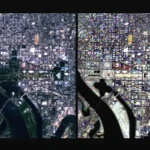
SAR instruments transmit microwave signals toward Earth and measure the returning energy rather than relying on reflected sunlight. This allows them to collect imagery at night and through clouds, smoke and many weather conditions that can prevent optical satellites from observing the surface.
Those capabilities are particularly relevant to Japan and other regions exposed to earthquakes, floods, landslides and typhoons. Radar imagery can help emergency authorities identify inundated areas, damaged infrastructure and surface displacement even when cloud cover prevents conventional imaging.
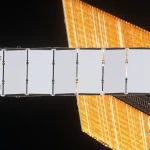
Synspective’s StriX spacecraft are in the roughly 100-kilogram class. Earlier satellites in the series have used a deployable radar antenna approximately five meters long and supported stripmap and sliding-spotlight observation modes, with ground resolutions in the one-to-three-meter range depending on the imaging configuration.
The company also uses interferometric synthetic aperture radar, or InSAR, to compare radar observations acquired over time. By measuring phase differences between images, InSAR analysis can reveal small changes in the ground surface associated with subsidence, seismic activity, slope instability and deformation around infrastructure.
Dedicated Launch Supports Constellation Operations
Electron’s role in the StriX program demonstrates why dedicated small launch remains commercially relevant despite the lower per-kilogram prices available on large rideshare missions.
A dedicated flight gives Synspective greater control over launch timing, orbital altitude and deployment conditions. Those factors affect when a SAR satellite can begin operations and how it fits into the geometry of the wider constellation. For radar operators using repeat-pass interferometry, orbit selection and revisit consistency are operational requirements rather than secondary launch preferences.
Rocket Lab and Synspective have also converted individual missions into a long-term launch relationship. Rocket Lab announced in October 2025 that it would conduct 21 additional Electron missions for Synspective before the end of the decade, following earlier launch agreements between the companies. The continuing campaign provides Synspective with a defined deployment path while giving Rocket Lab a substantial backlog of repeat commercial missions.
Standardizing launches around one vehicle can simplify spacecraft-to-launch-vehicle interfaces, separation-system qualification and mission planning. Once an interface has been demonstrated repeatedly, later satellites can move through integration with fewer mission-specific changes, although every spacecraft must still complete its own environmental acceptance and launch-site checks.
That repeatability is increasingly important as Synspective transitions from launching a small number of demonstration and early operational spacecraft to producing satellites at constellation scale. Reaching approximately 30 satellites will require sustained manufacturing throughput, dependable delivery of radar payloads and deployable antennas, and coordinated environmental testing without allowing integration or test capacity to become a production bottleneck.
Japan’s Commercial SAR Market Accelerates
Synspective is part of a growing Japanese commercial radar-imaging sector that also includes the Institute for Q-shu Pioneers of Space, or iQPS. Both companies are deploying relatively small SAR spacecraft and have become major repeat customers for Electron.
Rocket Lab launched two iQPS satellites in August 2026 alone, following earlier missions for the company. The concentration of Japanese SAR launches on Electron illustrates the value of a launch vehicle capable of delivering individual spacecraft to customer-selected orbits on a relatively frequent schedule.
For Synspective, however, deploying spacecraft is only one part of building a commercially useful service. The value of a larger constellation will depend on how quickly the company can task satellites, downlink and process radar data, and convert complex SAR measurements into products that customers can use without specialist radar expertise.
Each additional satellite reduces the interval between observation opportunities and increases the company’s capacity to respond to time-sensitive events. As the StriX fleet approaches operational scale, Synspective will be able to shift from periodic coverage toward more persistent monitoring of infrastructure, cities and disaster-prone regions.