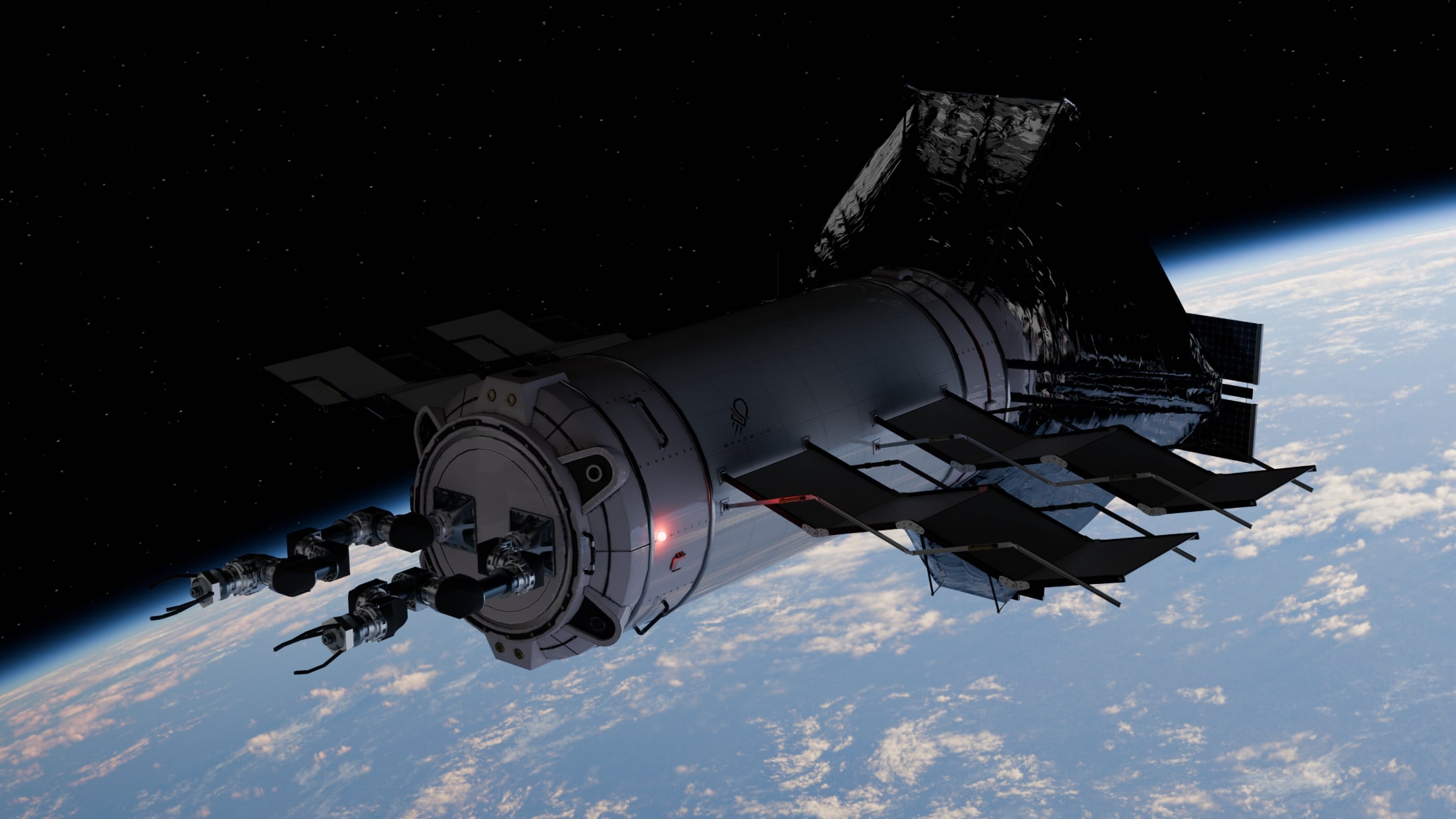
U.S. robotics startup Spaceium has demonstrated a high-precision actuator in orbit, a technology it says could enable future robotic refueling and servicing of satellites.
The component flew aboard a SpaceX Transporter rideshare mission launched in November and was tested in space rather than in laboratory conditions. According to the company, the device achieved rotational accuracy of 0.003 degrees despite exposure to extreme temperature swings and radiation.
Actuators control the fine movements of robotic systems, and Spaceium said that when integrated into a full robotic arm comparable to those already operating in space, the measured precision would translate to less than one millimeter of motion at the arm’s tip.
The company views the demonstration as an early step toward enabling delicate operations such as transferring propellant between spacecraft. Handling fuel in microgravity requires extremely precise positioning to avoid leaks, contamination or collision.
Spaceium plans to conduct additional missions to demonstrate complete refueling capabilities using full-scale robotic systems. In-orbit refueling is seen as a way to extend satellite lifetimes, reduce space debris and enable more flexible mission operations.
The concept has been explored for decades by agencies including NASA and DARPA, as well as commercial operators. More recent efforts include satellite life-extension services that dock with aging spacecraft to provide propulsion without transferring fuel directly.
For example, Northrop Grumman’s Mission Extension Vehicle program successfully attached servicing spacecraft to aging communications satellites in geostationary orbit, while companies such as Astroscale are preparing missions to demonstrate refueling technologies in the coming years.
Spaceium said its technology is designed not only to build structures in orbit but also to support maintenance operations essential for future space infrastructure.