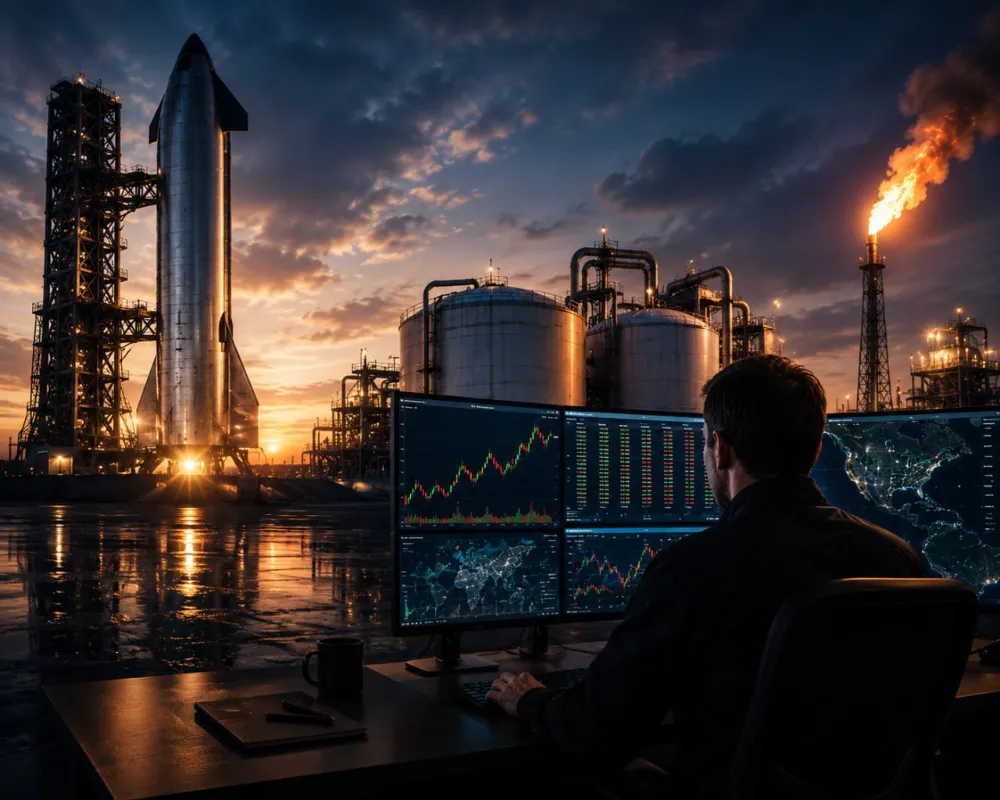
SpaceX is moving deeper into the energy sector as it seeks greater control over the fuel and power resources needed to support its rapidly expanding launch, manufacturing, and infrastructure operations.
The company is hiring a dedicated natural gas trader to establish and lead a new internal trading team responsible for managing physical and financial natural gas transactions. The role, advertised for locations at either Starbase, Texas, or Cape Canaveral, Florida, marks another step in SpaceX’s effort to bring critical energy supply chains under its direct control.
According to the job posting, the trader will be tasked with developing trading strategies, managing supply risks, securing reliable energy deliveries, and building a team capable of supporting the company’s growing fuel and power requirements. Responsibilities include monitoring pipeline markets, storage assets, power agreements, regulatory developments, and broader energy-market dynamics.
From Rocket Fuel Procurement to Energy Market Participation
The hiring effort highlights how natural gas has become strategically important to SpaceX beyond its traditional role as an industrial commodity.
Starship, the company’s next-generation fully reusable launch system, uses liquid methane and liquid oxygen as propellants. Methane is derived from natural gas, making fuel availability and pricing increasingly important as SpaceX seeks to dramatically increase launch frequency over the coming years.
The new position goes well beyond conventional procurement. The trader will be expected to originate and execute physical and financial transactions, manage market exposure, analyze supply-demand conditions, and generate trading strategies across hubs, pipelines, storage facilities, and related infrastructure.
This approach resembles the practices used by major utilities, industrial manufacturers, and energy companies that actively participate in commodity markets rather than simply purchasing fuel under standard supply contracts.
Part of a Much Larger Energy Infrastructure Buildout
The hiring announcement follows a series of energy-related initiatives that suggest SpaceX is building an integrated fuel and power ecosystem.
Earlier this month, the company disclosed plans to construct gas-fired power plants to support a large semiconductor manufacturing facility being developed in Texas. The project’s electricity requirements are expected to be substantial, reflecting the growing power demands associated with advanced semiconductor production and AI-related infrastructure.
SpaceX has also been recruiting for additional energy-focused positions, including pipeline and gas supply management roles that involve negotiating transportation agreements, securing pipeline capacity, and developing long-term fuel supply strategies.
Company President and Chief Operating Officer Gwynne Shotwell previously indicated that SpaceX intends to develop its own gas infrastructure, including pipelines and potentially natural gas production assets, describing them as major investments needed to support future propellant requirements.
Together, these developments suggest SpaceX is pursuing an increasingly self-sufficient energy model rather than relying solely on external suppliers.
Starpipe and the Drive for High-Cadence Starship Operations
A major component of that strategy is the planned “Starpipe” natural gas pipeline serving Starbase in South Texas.
SpaceX announced plans in June to construct an approximately eight-mile pipeline that would transport natural gas directly to the company’s launch complex. The project is intended to replace or reduce reliance on truck-based fuel deliveries and support much higher launch rates for Starship. Reuters reported that the pipeline is expected to supply methane feedstock for liquefaction and eventual rocket fueling operations.
Current Starship operations require enormous quantities of methane. As SpaceX works toward rapid reuse and airline-like launch operations, fuel logistics become increasingly critical. A dedicated pipeline, combined with in-house trading expertise, would allow the company to manage both physical supply and price volatility more effectively.
The strategy mirrors a broader trend among large industrial operators seeking direct control over key infrastructure rather than relying on fragmented external supply chains.
Aerospace Companies Are Becoming Energy Companies
Historically, launch providers purchased fuel through established industrial gas and energy suppliers. SpaceX appears to be moving toward a different model in which fuel sourcing, transportation, storage, and pricing management become internal capabilities.
The move reflects the scale SpaceX is targeting. Falcon 9 already flies more frequently than any other orbital launch vehicle in history, while Starship is designed for significantly higher operational tempo. Future ambitions include supporting Starlink expansion, lunar transportation missions, and eventual Mars campaigns.
At the same time, SpaceX’s activities increasingly overlap with adjacent sectors such as semiconductor manufacturing, artificial intelligence infrastructure, power generation, and industrial construction. Each of those areas carries substantial energy requirements.
The result is a company whose operational footprint increasingly resembles that of a large industrial conglomerate rather than a traditional launch provider.
Competitive Implications for the Space Industry
Few aerospace companies currently possess the scale or capital necessary to replicate SpaceX’s approach.
Most launch providers remain dependent on external suppliers for propellants, electricity, and logistics infrastructure. Building internal trading desks, pipelines, power plants, and potentially upstream fuel production assets requires significant investment and operational expertise.
If successful, SpaceX could gain advantages in fuel cost predictability, supply security, and operational flexibility. These factors become increasingly important as launch rates rise and as methane-fueled rockets become more common across the industry.
Competitors developing methane-powered launch vehicles—including companies in the United States, Europe, and China—will face similar challenges in securing reliable fuel supplies for large-scale operations. While most currently focus on vehicle development and launch infrastructure, SpaceX is increasingly addressing the broader industrial ecosystem required to sustain high-frequency launch activity.
Fuel Security as a Mars-Enabling Capability
The natural gas trading initiative may appear unusual for a space company, but it aligns closely with SpaceX’s long-term philosophy of vertical integration.
The company already manufactures engines, structures, avionics, satellites, user terminals, and many other critical systems internally. Extending that philosophy into energy procurement and fuel infrastructure reduces reliance on external market participants and can improve resilience during periods of supply disruption.
For Starship specifically, reliable access to methane is not merely a cost issue—it is a foundational requirement for the high-flight-rate architecture SpaceX envisions for lunar logistics, global satellite deployment, and eventual Mars transportation.
By creating an in-house natural gas trading operation, SpaceX is signaling that energy supply has become a strategic capability rather than a routine procurement function. As the company scales both its terrestrial industrial footprint and its spaceflight ambitions, control of fuel and power resources may become as important as control of rockets themselves.