SpaceXAI has selected Nvidia’s Vera CPU architecture and the broader Vera Rubin platform to support its next-generation agentic artificial intelligence infrastructure, marking a significant expansion of the partnership between Elon Musk’s AI ambitions and Nvidia’s rapidly growing AI computing ecosystem. The announcement positions Nvidia’s first CPU specifically designed for AI agents at the center of SpaceXAI’s plans to scale Grok and eventually deploy advanced AI computing capabilities in orbit.
According to Nvidia, SpaceXAI will use Vera CPUs to accelerate agentic AI workloads that increasingly depend on CPUs to orchestrate software tools, execute code, process data, and run simulations between model-inference tasks. The company is also expanding Grok’s infrastructure around Nvidia’s Vera Rubin platform while planning to extend the architecture into space through its first-generation Starmind AI satellite system.
Why Agentic AI Needs More Than GPUs
The decision reflects a broader shift underway across the AI industry. While graphics processing units remain the dominant hardware for training and running large language models, agentic AI systems place growing demands on CPUs. Unlike conventional chatbots that primarily generate text, agentic systems are designed to take actions, execute workflows, call external tools, run software, and coordinate complex sequences of tasks.
These capabilities require substantial CPU resources to manage data movement, software orchestration, memory operations, and task scheduling. Nvidia says Vera was specifically developed for these workloads, enabling AI agents to operate more efficiently while keeping expensive GPUs fully utilized. The company claims the architecture can complete tasks significantly faster than traditional x86-based systems while providing extremely high memory bandwidth through LPDDR5X memory.
The move highlights how the AI infrastructure race is evolving beyond raw GPU counts. Companies building advanced AI systems increasingly need tightly integrated CPU-GPU architectures that can support autonomous software agents operating at massive scale.
Vera Rubin Becomes the Foundation of SpaceXAI’s AI Expansion
The announcement further deepens ties between Nvidia and Elon Musk’s AI ecosystem.
Earlier this month, Musk said SpaceX and xAI would standardize on Nvidia hardware and use the company’s Vera Rubin architecture going forward, describing it as the leading AI computing platform currently available. At the time, Musk also disclosed plans to deploy an optimized Vera Rubin NVL72 system in space as part of future orbital AI initiatives.
The Vera Rubin platform represents Nvidia’s next-generation AI infrastructure architecture, combining CPUs, GPUs, networking, data-processing units, and software into a unified system. A full NVL72 configuration contains dozens of Vera CPUs and Rubin GPUs connected through high-bandwidth interconnects designed to support large-scale AI workloads.
For SpaceXAI, adopting the platform creates a common hardware foundation spanning terrestrial AI factories and future space-based computing systems. Nvidia describes the architecture as a scalable solution capable of supporting deployments ranging from conventional data centers to orbital computing environments.
Starmind and the Push Toward AI Infrastructure in Orbit
Perhaps the most ambitious element of the announcement is SpaceXAI’s intention to bring Vera Rubin technology into space.
The company plans to use an optimized Vera Rubin NVL72 system aboard its first-generation Starmind AI satellite, extending AI computing capabilities beyond Earth-based facilities. Nvidia and SpaceXAI have framed the project as a step toward creating advanced orbital computing infrastructure capable of processing data directly in space.
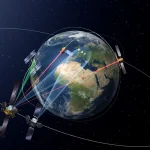
The concept aligns with a growing movement toward space-based AI computing. Traditional satellites often collect large amounts of data and transmit it to Earth for processing. Orbital computing aims to move at least part of that processing into space itself, reducing latency, lowering communications requirements, and enabling faster autonomous decision-making.
Such capabilities could benefit Earth-observation satellites, communications networks, military systems, space stations, deep-space missions, and future autonomous spacecraft fleets. Nvidia’s dedicated Space-1 Vera Rubin module, unveiled earlier this year, was specifically designed to bring data-center-class AI performance into orbital environments while operating on solar power.
Technical Challenges Remain Significant
Despite growing enthusiasm, orbital AI infrastructure faces substantial engineering hurdles.
Computing hardware designed for terrestrial data centers must be adapted to survive radiation exposure, thermal cycling, vacuum conditions, and launch stresses. Cooling systems represent another major challenge. Modern AI hardware consumes enormous amounts of power and generates substantial heat, yet space lacks the atmosphere needed for conventional cooling techniques.
Power generation is another limiting factor. Large AI systems require vast amounts of electricity, meaning orbital computing platforms must rely on increasingly sophisticated solar arrays and power-management systems. Nvidia and several commercial space companies are exploring architectures that combine advanced AI accelerators with solar-powered orbital infrastructure.
Industry researchers continue to debate whether large-scale space computing can compete economically with terrestrial facilities. Critics argue that Earth-based data centers will remain cheaper for years, while advocates point to regulatory advantages, abundant solar energy in orbit, and falling launch costs enabled by reusable rockets.
A Growing Competitive Race in Orbital AI
SpaceXAI’s announcement arrives amid increasing competition to establish leadership in orbital computing.
Nvidia has spent much of 2026 positioning itself as the foundational hardware supplier for space-based AI systems. Multiple commercial space companies are already exploring the use of Nvidia technology for orbital data centers, autonomous spacecraft operations, and edge computing in space.
At the same time, a growing number of startups and technology companies are investigating space-based data center concepts. Proposed systems seek to exploit continuous solar power availability in orbit while avoiding some of the energy and land constraints affecting terrestrial AI infrastructure. The emergence of reusable heavy-lift launch systems is helping make such concepts appear increasingly plausible, even if large-scale deployment remains years away.
The race has also become strategically important because AI infrastructure is increasingly viewed as critical national and commercial infrastructure. Companies capable of integrating AI computing across Earth, orbit, and eventually deep-space environments may gain significant advantages in communications, intelligence gathering, scientific research, and autonomous operations.
From AI Factories to Space-Based Compute Networks
The SpaceXAI-Nvidia partnership illustrates how the AI and space industries are beginning to converge.
What began as a push to build larger terrestrial AI clusters is evolving into a broader effort to create distributed computing architectures that extend beyond Earth. Nvidia’s Vera CPU and Vera Rubin platform are being positioned as foundational technologies for that transition, while SpaceXAI appears determined to test whether advanced AI infrastructure can operate not only in massive data centers but also in orbit.
If successful, the initiative could help establish a new category of space infrastructure where satellites are no longer merely sensors or communications relays but become powerful computing nodes capable of running sophisticated AI models directly in space. While substantial technical and economic obstacles remain, SpaceXAI’s adoption of Nvidia’s latest AI architecture represents another step toward a future in which artificial intelligence operates seamlessly across both terrestrial and orbital environments.
Conclusion
SpaceXAI’s decision to deploy Nvidia Vera CPUs and the Vera Rubin platform underscores the growing importance of CPU-GPU integration for agentic AI systems and reinforces Nvidia’s position at the center of next-generation AI infrastructure. Beyond supporting Grok and future AI agents on Earth, the partnership also advances plans for orbital computing through the Starmind satellite program. As launch costs decline and space-based computing technologies mature, projects like Starmind may become an early test of whether large-scale AI can eventually expand beyond terrestrial data centers and into orbit.