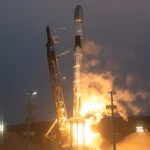
SpaceX is targeting no earlier than September 28 for Starship Flight 14, pending regulatory approval, in what would be the vehicle’s first orbital mission after 13 suborbital flight tests. The mission is expected to carry 26 Starlink V3 satellites and comes as SpaceX moves Launch Complex 39A at NASA’s Kennedy Space Center toward operational status, laying the groundwork for Starship flights from both Texas and Florida.
Flight 14 would mark a major transition from Starship’s experimental suborbital campaign toward sustained orbital operations. SpaceX plans to place Ship 41 into an orbit approximately 275 km above Earth, complete about six revolutions during a mission lasting nearly 10 hours, deploy the Starlink satellites and then conduct a controlled deorbit.
Ship 41 is expected to reenter over the Pacific Ocean and splash down west of Chile. The mission will therefore test not only orbital insertion and payload deployment but also Starship’s ability to remain in orbit for an extended period before executing a planned deorbit and atmospheric reentry.
Super Heavy Booster 21 is not scheduled to return to the Starbase launch tower for a catch. Instead, the booster will perform a boostback maneuver, landing burn and controlled splashdown in the Gulf. SpaceX has incorporated hardware and software changes intended to improve engine-data filtering and relight reliability following Flight 13.
The flight’s 26 Starlink V3 satellites would represent Starship’s first operational-scale payload deployment. The larger V3 spacecraft are designed around Starship’s substantially greater payload volume and mass capacity compared with Falcon 9, making successful deployment an important step toward using Starship for future Starlink constellation expansion.
Flight 15 Could Open the Door to Ship Recovery
If Flight 14 demonstrates reliable orbital flight, payload deployment and controlled reentry, Flight 15 could become the first realistic opportunity for SpaceX to attempt a Starship catch. Under the most ambitious scenario, SpaceX could try to recover both the Super Heavy booster and the upper-stage ship using the launch tower’s mechanical arms.
Any recovery attempt would depend on the performance data collected during Flight 14. SpaceX must demonstrate sufficiently precise guidance, propulsion and vehicle control before committing a returning ship to an approach near the launch tower.
Flight 16 is currently viewed as the earliest plausible mission for Starship’s debut from LC-39A. Workers at Kennedy Space Center have reportedly begun referring internally to that flight as a Pad 39A mission, although launching from Florida by the end of 2026 remains a best-case schedule rather than a confirmed milestone.
One possible sequence would involve sending Booster 22 to Kennedy Space Center after its planned recovery on Flight 15. If that recovery encounters problems while Flight 16 remains assigned to LC-39A, SpaceX could instead transport a newly manufactured booster from Texas to Florida.
LC-39A Ground Systems Enter Advanced Testing
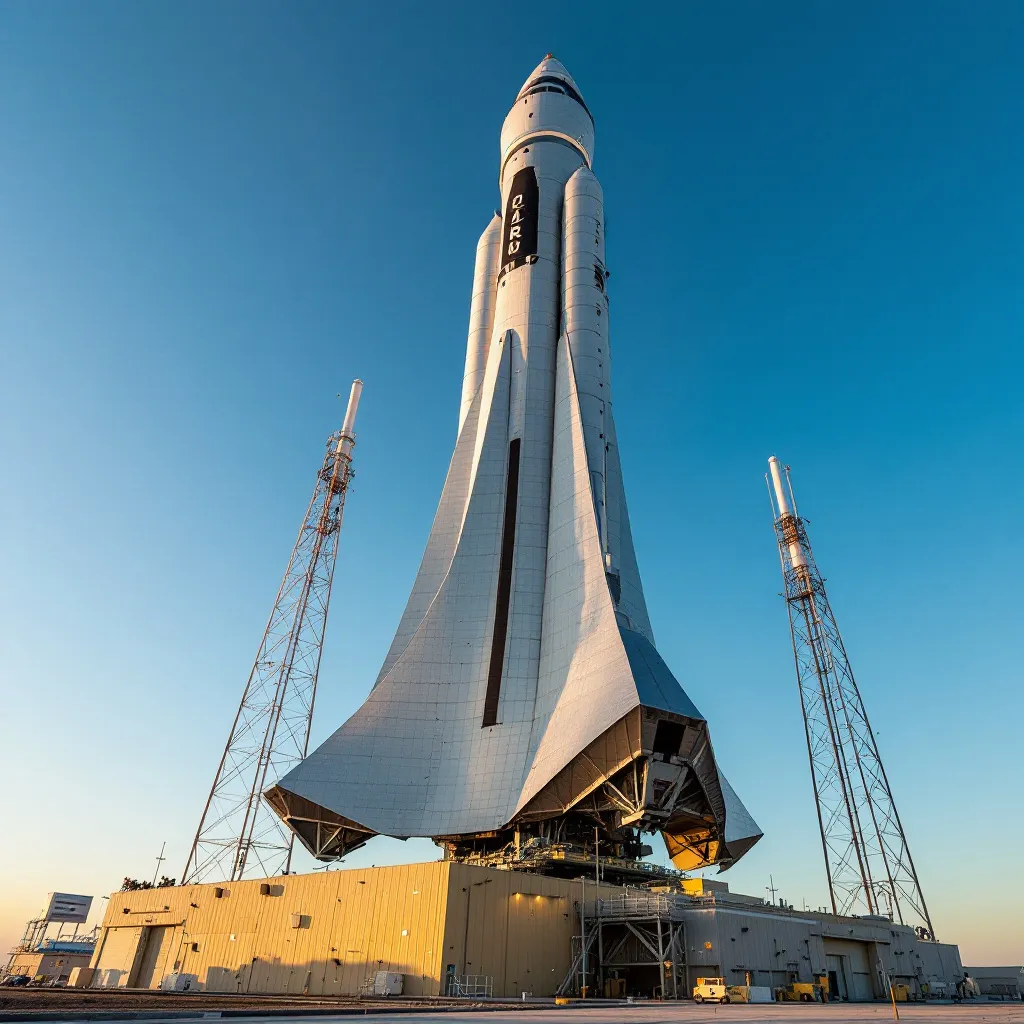
Major construction at the Florida Starship pad appears to be largely complete, with recent activity shifting toward testing the propellant systems, launch tower and vehicle interfaces.
The LC-39A tank farm was active on three days during the week preceding September 18. On September 8, all major vents were operating as the facility stored, subcooled and transferred liquid nitrogen, liquid oxygen and methane for ground testing and eventual launch operations.
Liquid nitrogen is commonly used to test and condition cryogenic systems without introducing combustible propellant. These tests allow engineers to evaluate tanks, pumps, valves, transfer lines and thermal behavior before conducting full operations with liquid methane and oxygen.
SpaceX removed the launch tower’s left chopstick actuator on September 1 and reinstalled it on September 10. Unlike the hydraulic pistons used on Starbase’s first launch tower, the newer chopstick system employs electromechanical actuators. The revised architecture is expected to provide more precise control and faster responses during vehicle lifting and recovery operations.
The ship quick-disconnect arm also completed load testing. That work was intended to confirm that the structure can support propellant-filled transfer lines and withstand substantial lateral forces during ground operations.
On September 12, SpaceX opened the tower vent at LC-39A for the first time, indicating that chilldown of the ground-support equipment feeding Starship had begun. Venting is needed to remove residual air and vapor from newly constructed lines and prepare the system for cryogenic fluid transfer.
Cameras also recorded a Gigabay work stand and a horizontal-transport aft frame for Starship aboard a barge heading toward Starbase. The equipment is likely associated with plans to transport the first Starship from Texas to Florida aboard the barge You’ll Thank Me Later.
Starship Prepares to Join LC-39A’s Launch History
Launch Complex 39A was constructed in the 1960s for NASA’s Saturn V program. Apollo 4 lifted off from the pad in November 1967, followed by the Apollo 11 lunar landing mission on July 16, 1969. The LC-39 complex supported 12 of the 13 Saturn V launches.
The pad subsequently hosted 82 of the Space Shuttle program’s 135 missions before Atlantis completed the final shuttle flight in 2011. NASA leased LC-39A to SpaceX in 2014 under an agreement facilitated by Space Florida, and the company has since used the site for Falcon 9 and Falcon Heavy missions.
Starship’s arrival would begin another phase in the pad’s operational history. Before that can happen, Flight 14 must secure regulatory approval, complete a clean countdown and demonstrate orbital insertion, payload deployment, deorbit and controlled reentry. The results will determine whether Flight 15 can proceed with more ambitious recovery objectives and whether Flight 16 can realistically become the first Starship mission launched from Florida.