German launch vehicle developer HyImpulse announced September 2, 2026, that it had raised more than €50 million, approximately $58 million, in a Series A extension to advance its suborbital SR75 and orbital SL1 rockets. The financing comes as the company prepares for a second SR75 flight from SaxaVord Spaceport in Scotland before the end of 2026.
JOIN Capital and Ace Capital Partners co-led the extension, with new investors including North Ventures, BW-Capital, Bayern Kapital and the German Aerospace Center, according to the announcement. Existing shareholders, including Campus Founders Ventures, also provided support. The financing brings HyImpulse’s combined equity and public funding to more than €125 million.
The company plans to expand production capacity and commercial operations alongside vehicle development. HyImpulse reports an order book exceeding €350 million across its suborbital and orbital programs, targeting commercial, institutional and defense customers. The reported order book should not be confused with revenue already generated.
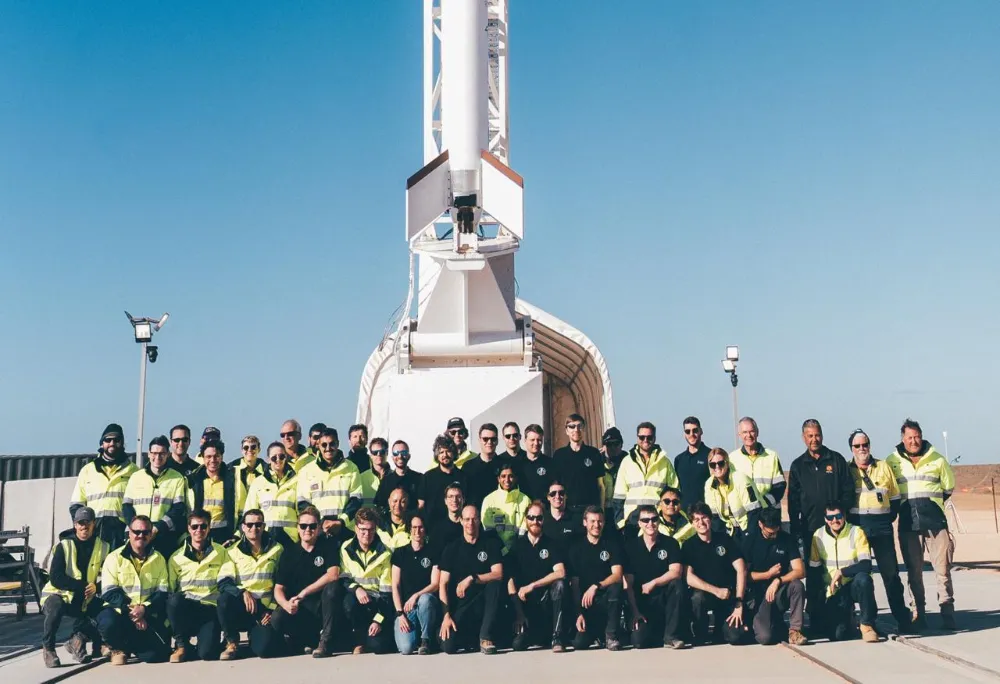
The extension follows an initial €15 million Series A announced in October 2025, taking equity raised through the round above €65 million. HyImpulse’s next operational milestone is SR75’s second flight, following its inaugural launch from the Koonibba Test Range in South Australia in May 2024.
The company previously described the second mission as SR75’s first commercial flight carrying customers. Its latest announcement retained the target of launching from SaxaVord before year-end but did not specify a launch date or payload manifest.
HyImpulse is also preparing the maiden flight of SL1, a three-stage orbital launcher designed to deliver up to 600 kilograms to low Earth orbit. The company previously targeted 2027 for that mission, although the September funding announcement did not reaffirm a specific year.
Both vehicles use hybrid propulsion combining solid paraffin fuel with liquid oxygen. Unlike an engine supplied with two liquid propellants, this arrangement stores the fuel as a solid grain while feeding liquid oxidizer into the combustion chamber. HyImpulse argues that the architecture reduces system complexity and component count, supporting simpler handling and potentially lower costs.
The company identifies a 75-kilonewton motor as SR75’s propulsion system and a 90-kilonewton motor, hot-fire tested in 2025, for SL1. This distinction matters: SR75 provides relevant flight experience, but the orbital vehicle still requires demonstration of its own propulsion configuration and complete multistage flight sequence. A successful suborbital mission alone does not establish orbital launch capability or routine commercial economics.
The financing also coincides with another substantial investment in European launch development. Spain’s PLD Space announced September 1 that it had added €108 million to its latest equity round, bringing that round to €288 million and cumulative funding to €488 million. The two transactions demonstrate continued investor support for European launch capacity, although funding totals alone do not establish operational readiness.
For HyImpulse, the commercial proposition centers on dedicated missions that offer customers greater control over launch timing and destination orbit. Turning that proposition into a sustainable service will require repeatable vehicle production, reliable flights and competitive operating costs. The next concrete test is the planned SR75 mission from SaxaVord, followed by the more demanding transition to SL1’s first orbital launch.