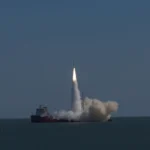
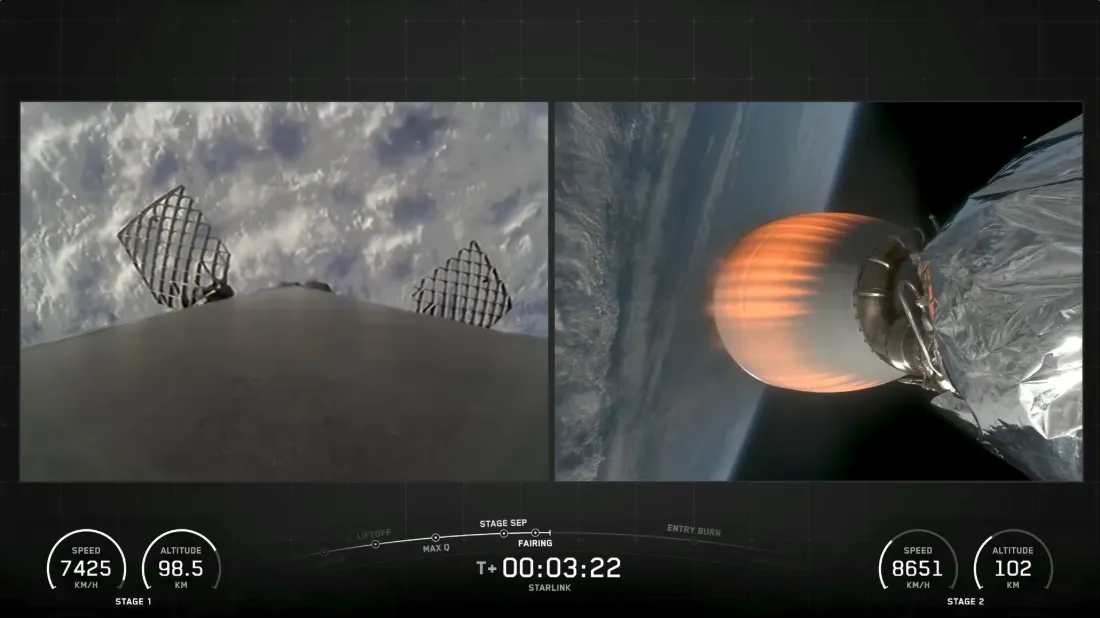
A SpaceX Falcon 9 launched 27 Starlink satellites from Space Launch Complex 4 East (SLC-4E) at Vandenberg Space Force Base in California on Sept. 6, 2026. It was the 80th Starlink satellite mission of the 2026. Credit: SpaceX
SpaceX launched 27 Starlink broadband satellites from Vandenberg Space Force Base in California on September 6, 2026, completing its 103rd Falcon 9 mission of the year. The Starlink Group 15-24 flight lifted off at 7:26 a.m. PDT, or 14:26 UTC, to expand the company’s low Earth orbit network.
First-stage booster B1088 landed on the drone ship Of Course I Still Love You in the Pacific Ocean approximately 8.5 minutes after liftoff, completing its 19th flight. The upper stage deployed the satellites on schedule about 62 minutes after launch.

A SpaceX Falcon 9 rocket launches 27 Starlink satellites into orbit from Vandenberg Space Force Base in California on Sept. 6, 2026. (Image credit: SpaceX)
B1088’s previous assignments included NROL-126, Transporter-12, SPHEREx, NROL-57 and multiple Starlink missions. Its flight count remains below the fleet record of 37, set by B1067 on August 25.
Starlink deployments account for 80 of this year’s 103 Falcon 9 missions—approximately 78% of the total. The constellation now has more than 11,000 active satellites, according to satellite tracker Jonathan McDowell.
Launch and deployment are only part of constellation expansion. Starlink satellites use low-thrust electric propulsion to change their orbits, including raising their altitude after release. This separates the launch vehicle’s delivery task from the spacecraft’s subsequent maneuvering into operational positions.

SpaceX’s sooty Falcon 9 rocket first stage on the drone ship Of Course I Still Love You in the Pacific Ocean after a successful launch and landing on Sept. 6, 2026. (Image credit: SpaceX)
The network also uses optical intersatellite links to move traffic between spacecraft. Starlink describes its satellite architecture as incorporating three laser links per satellite, each operating at up to 200 gigabits per second. Those connections allow data to travel through the constellation, extending routing options beyond direct satellite-to-ground connections.
Vandenberg currently handles all Starlink launches following SpaceX’s suspension of Florida missions pending Starship operations on the Space Coast. That concentrates near-term deployment activity in California while the company prepares a transition to larger spacecraft.
SpaceX plans to use Starship for its larger, more capable V3 satellites. Elon Musk has outlined an ambition for roughly 100,000 V3 spacecraft in low Earth orbit. Achieving that scale will depend on moving Starship into sustained satellite deployment operations, making its launch capability a central requirement for the constellation’s next expansion phase.