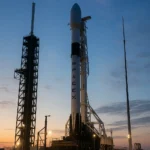
SpaceX, Blue Origin, Stoke Space and Starcloud withdrew from French President Emmanuel Macron’s International Space Summit in Paris after the White House warned that participation could be interpreted as support for European Union space policies. France’s government confirmed the four withdrawals on September 3, 2026, ahead of the September 9–10 event.
The cancellations remove two of the most prominent U.S. commercial space companies from a gathering intended to bring governments, industry and scientific organizations together to discuss the sector’s future. They also bring transatlantic policy disagreements directly into an industry where European ambitions for greater independence coexist with extensive international cooperation.
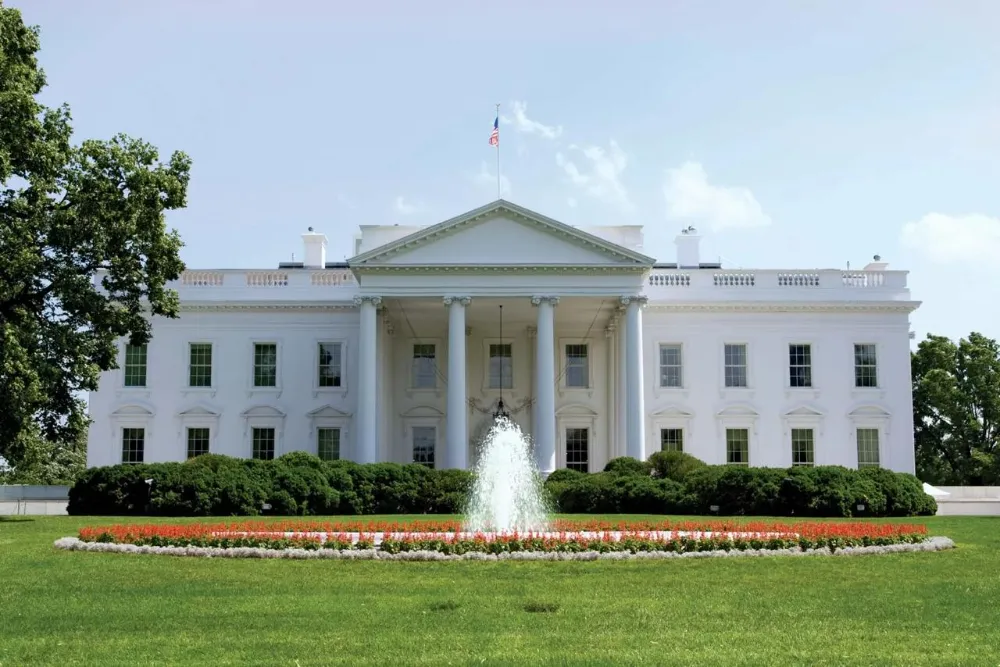
The White House’s Office of Science and Technology Policy held a call with U.S. companies in late August, cautioning that attendance could signal endorsement of European positions Washington opposed. People familiar with the discussions said officials strongly discouraged participation but did not explicitly order companies to stay away. Some planned announcements involving European and American companies were also canceled, while other U.S. firms remained expected to attend.
France has invited nearly 120 foreign delegations to the summit. Its agenda covers space security, the space economy, responsible governance, science and exploration, with discussions intended to connect issues such as growing use of low Earth orbit, lunar exploration and workforce development. Astronaut Thomas Pesquet and entrepreneur Hélène Huby serve as Macron’s special envoys for the gathering.
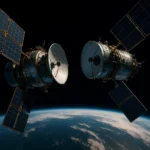
The withdrawals coincide with European concerns about dependence on U.S. commercial space infrastructure. On September 3, Spain’s minister responsible for space cited Elon Musk’s control of roughly two-thirds of operating satellites as a motivation for Spanish investment in the European IRIS² communications constellation. The figure was presented as the minister’s rationale for supporting an alternative European capability.
IRIS², short for Infrastructure for Resilience, Interconnectivity and Security by Satellite, is intended to provide secure communications for public authorities and broadband connectivity across Europe and beyond. Its planned combination of satellites in low and medium Earth orbit would give Europe communications infrastructure designed around its own security and service requirements.
The program was already advancing before the summit dispute. On August 7, the European Commission and the SpaceRISE consortium signed an implementation agreement expanding the main constellation to 348 satellites. That chronology matters: Europe’s investment in alternative infrastructure predates the withdrawals, and the cancellations alone do not establish that governments will accelerate spending further.
The withdrawals sharpen a broader question for Europe: whether governments will accelerate investment in independent launch capabilities and satellite infrastructure to reduce exposure to U.S. political decisions. The episode suggests that American commercial space companies are increasingly being drawn into Washington’s foreign-policy disputes, adding a diplomatic dimension to Europe’s existing concerns about dependence on U.S. providers.