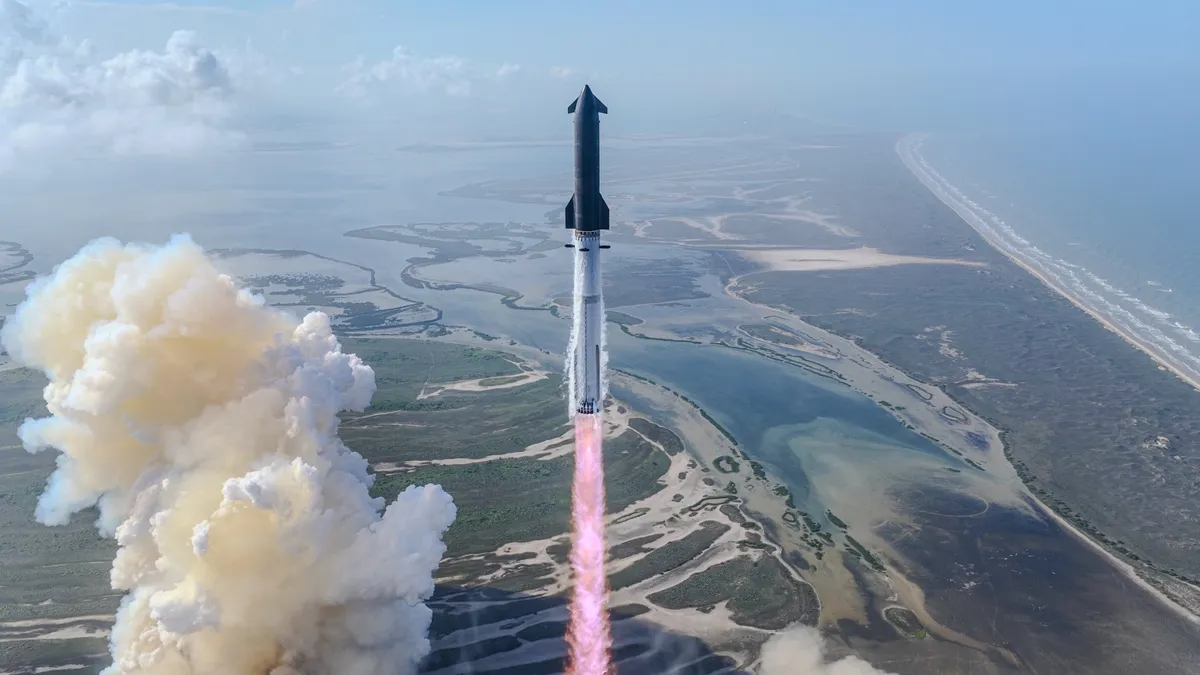
SpaceX is targeting Sept. 22, 2026, for the first orbital flight of its Starship launch system, a roughly 10-hour mission that will deploy 26 Starlink V3 satellites and send the spacecraft around Earth six times before a planned Pacific Ocean splashdown. Flight 14 is scheduled to lift off from Starbase in South Texas during a 75-minute window opening at 8:15 a.m. EDT, or 12:15 UTC.
The mission will mark a major transition in Starship’s test program. All 13 previous integrated flights, beginning with the vehicle’s April 2023 debut, followed suborbital trajectories. Those missions typically lasted about 65 minutes, with the upper-stage spacecraft—known as Ship—descending into the Indian Ocean west of Australia without completing a full orbit.
Flight 14 is designed to reach an altitude of approximately 275 kilometers and complete six Earth orbits. The 52-meter-tall Ship will then conduct a deorbit maneuver and target a controlled splashdown in the Pacific Ocean west of Chile about 10 hours after liftoff.
Reaching orbit would allow SpaceX to begin testing Starship under the conditions required for operational missions, including extended on-orbit flight, payload deployment, thermal management and controlled deorbit operations. SpaceX said the milestone will open the next phase of work toward making the system fully and rapidly reusable.
The complete Starship vehicle stands approximately 124 meters tall and consists of the Super Heavy first-stage booster and the Starship upper stage. SpaceX is developing both stages for recovery and repeated flight, although neither vehicle will be caught by Starbase’s launch-tower arms during Flight 14.
Super Heavy is expected to separate from Ship and descend toward a splashdown in the Gulf of Mexico approximately seven minutes after launch. SpaceX has successfully caught Super Heavy with the launch tower on three previous test flights, but has not yet attempted a tower catch of Ship.
First Starlink V3 Satellites to Enter the Constellation
Flight 14 will also carry Starship’s first operational satellite deployment. The vehicle is scheduled to release 26 Starlink V3 spacecraft, introducing a larger and more capable satellite generation designed specifically for launch aboard Starship.
SpaceX’s low Earth orbit broadband network currently includes more than 11,000 active satellites, but none are V3 models. The new spacecraft are intended to increase the network’s capacity, connection speeds and reliability. SpaceX founder and Chief Executive Elon Musk has said the company ultimately envisions a constellation containing as many as 100,000 V3 satellites, although deployment at that scale would depend on regulatory approvals, launch cadence and the performance of the new spacecraft.
The first V3 deployment will therefore serve two purposes: beginning the transition to the next Starlink architecture and demonstrating Starship’s ability to deliver operational payloads to orbit. Starship’s larger payload volume and lift capacity are central to SpaceX’s plan to deploy the heavier satellites at a substantially higher rate than is possible with Falcon 9.
Three of the satellites aboard Flight 14 will carry cameras positioned to photograph Ship’s heat shield following deployment. SpaceX plans to use the imagery to evaluate the condition of the thermal protection system before atmospheric reentry.
The heat shield remains one of the most important technical elements in achieving rapid reuse. Ship must withstand extreme heating during atmospheric return while limiting tile damage and reducing the inspection and refurbishment work required between missions. Orbital reentry will expose the vehicle to a more demanding thermal environment than its previous suborbital flights, making the camera observations particularly valuable for assessing shield performance.
Recovery and Refueling Milestones Remain Ahead
Flight 14 will prioritize orbital operations rather than recovery by the launch tower. A Ship catch, which has not yet been attempted, will remain a milestone for a future mission.
SpaceX must also demonstrate the transfer of cryogenic propellant between Starships in orbit. In-space refueling is fundamental to the company’s architecture for missions beyond low Earth orbit because a Starship launched from Earth would require additional propellant before departing for the moon or Mars.
For Flight 14, the immediate objectives are reaching orbit, deploying the first Starlink V3 satellites, gathering heat-shield imagery, completing an extended orbital mission and safely disposing of both stages in designated ocean areas. Achieving those goals would move Starship beyond short-duration suborbital testing and into the orbital development phase required for high-cadence satellite deployment and future human exploration missions.